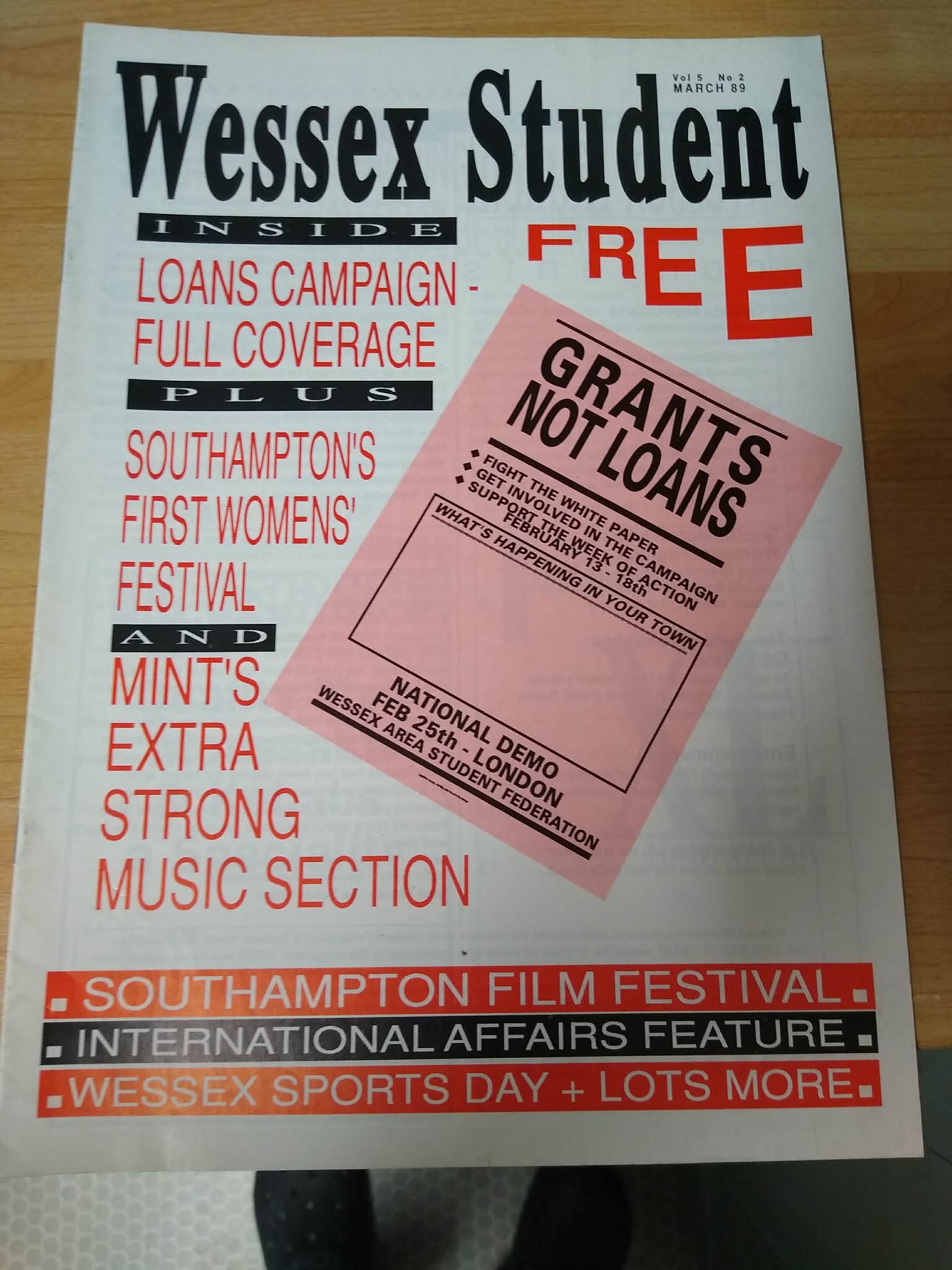
There’s something quietly charming about reading a student magazine from the 1980s and discovering that, even then, people were nervously giggling their way into Boots to buy a vibrator like it was contraband. The tone – half rebellious manifesto, half confessional – feels familiar. What’s changed isn’t the curiosity. Sex, whether with a partner or alone, can be fun and healthy.
Back then, the vibrator was framed as a kind of ideological battleground – a plastic ally in the fight against patriarchy, or depending on who you asked, a worrying symbol of it. Today, that debate feels almost quaint. Not because those questions disappeared, but because they’ve been absorbed into a much broader, more relaxed conversation about sexuality, autonomy, and pleasure.
For a start, the technology itself has had a glow-up. The clunky, multi-speed “novelty” devices of the past have given way to sleek, whisper-quiet, USB-rechargeable designs that wouldn’t look out of place next to your phone or your skincare routine. You no longer need to stockpile AA batteries like you’re preparing for a power outage. In fact, the modern student is far more likely to be worrying about losing a charging cable than being caught at the checkout with a suspiciously heavy packet of Duracells.
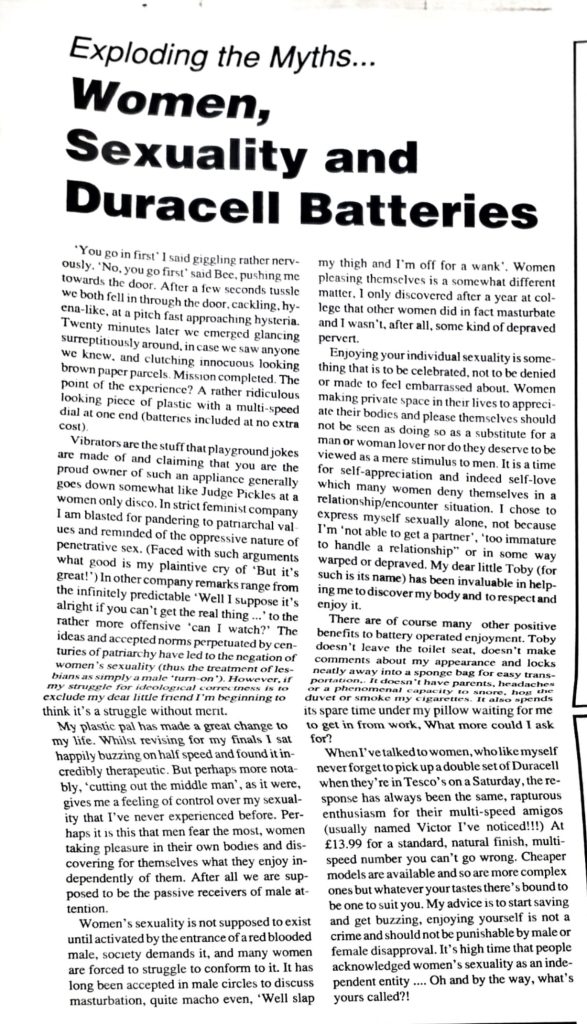
But the bigger shift is cultural. The original article reads like a defence – an argument that women’s pleasure exists, matters, and shouldn’t be shamed. That argument, while not completely won, has moved significantly. Conversations about sex are now more open, more inclusive, and crucially, less apologetic. Students today grow up in a world where discussions of consent, identity, and self-expression are part of the mainstream, not whispered after a few drinks in the kitchen.
That doesn’t mean everything is sorted. If anything, the pressure has just changed shape. Instead of silence, there’s noise – advice, expectations, algorithms feeding you “perfect” versions of intimacy and bodies. The awkwardness hasn’t gone; it’s just wearing better branding. If the 80s student worried about being judged for owning a vibrator, the 2020s student might worry about not being adventurous enough, or not matching some invisible standard of confidence.
What’s refreshing, though, is how normalised the idea of self-knowledge has become. The original writer framed her “plastic pal” as a revelation – something that allowed her to understand her own body on her own terms. That sentiment still holds, but it’s no longer quite so radical. It’s closer to common sense. Knowing what you like (and what you don’t) isn’t a political statement – it’s just part of being a healthy, functioning adult.
There’s also a broader inclusivity that was largely absent before. Conversations now extend beyond a narrow, heteronormative lens, recognising a spectrum of identities and experiences. The idea that sexuality is personal, varied, and evolving feels less like a challenge to the system and more like an accepted baseline.
And then there’s the practical reality – student life hasn’t changed that much. People are still broke, still experimenting, still navigating relationships that are equal parts exciting and confusing. The difference is that now, the tools – both literal and metaphorical – are easier to access, and the stigma is (mostly) lower. You’re less likely to feel like you’re doing something shameful, and more likely to treat it as just another aspect of looking after yourself.
If the 1980s article ended with a cheeky “what’s yours called?”, today’s version might not even bother asking. Not because the humour has gone, but because the secrecy has. The joke has shifted from whether people engage with their own sexuality to the endless variety of ways they do.
So yes, the batteries may have changed – rechargeable, eco-friendly, probably app-controlled – but the core message has aged surprisingly well. Enjoying your own sexuality still isn’t a crime. It’s just a lot less controversial to say so.
And honestly, that might be the biggest upgrade of all.